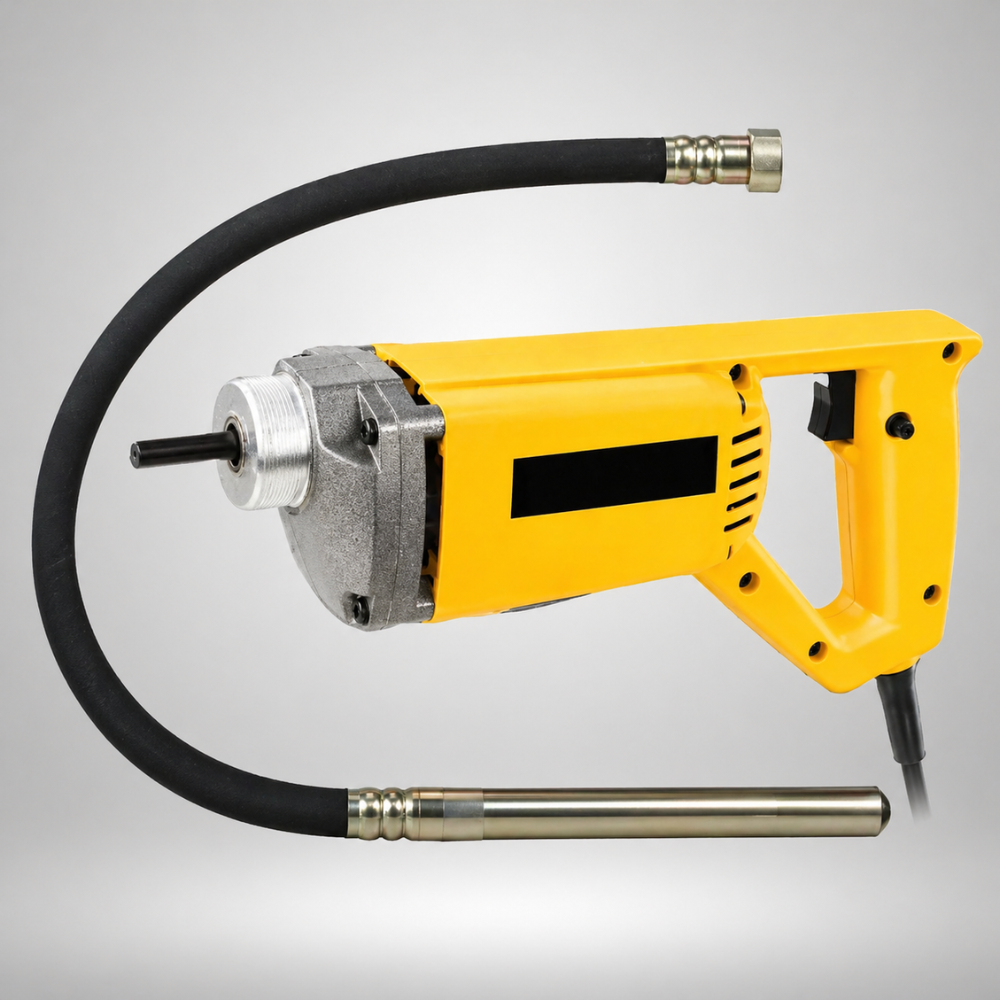
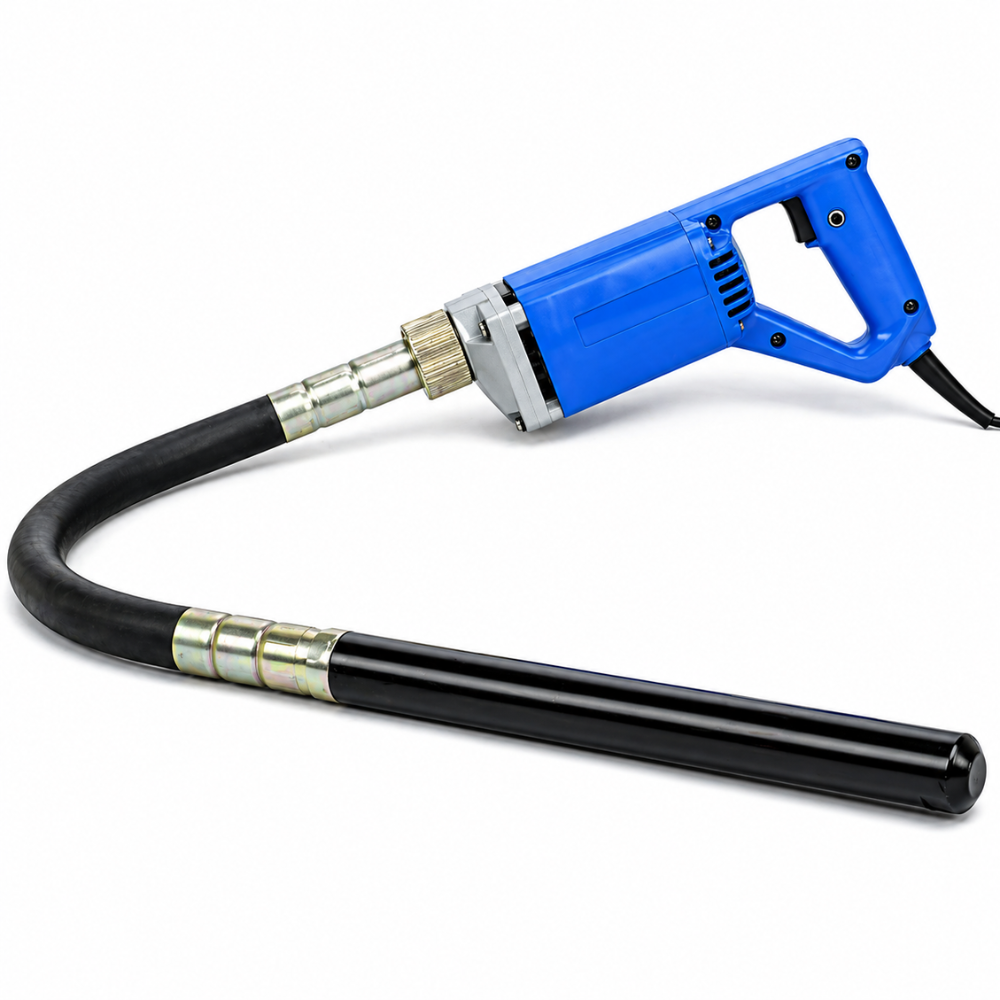
Concrete Vibrator

    Your Name*

    Your Phone*

    Your Email*

    Quantity

    Address*

    Description

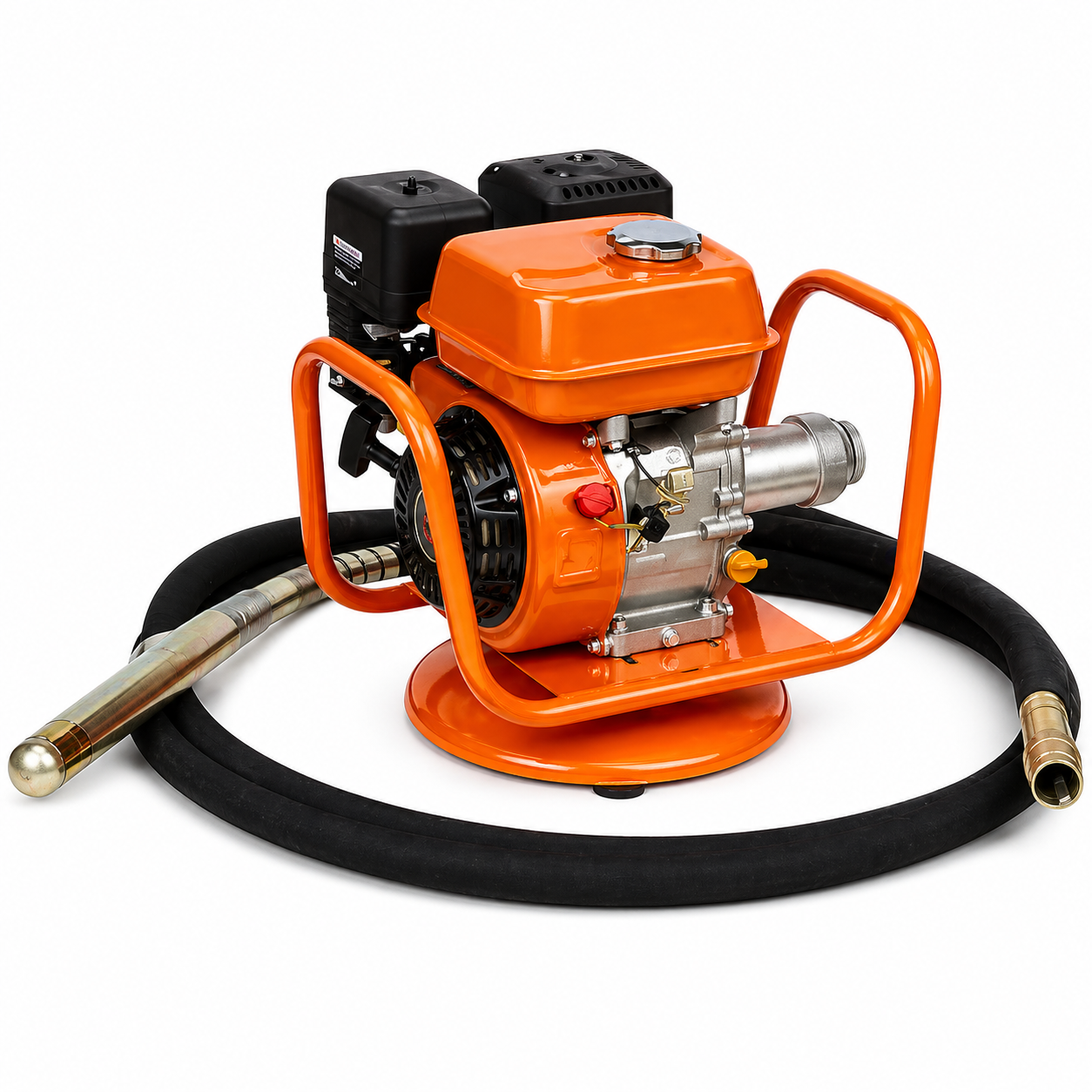
    A concrete vibrator is an essential construction tool used to remove air bubbles from freshly poured concrete, ensuring proper compaction and strength. It helps achieve a smooth, dense, and durable finish by evenly distributing the concrete mix. These machines are available in electric, petrol, and diesel variants, making them suitable for different site conditions. Their efficient vibration mechanism improves structural integrity and reduces the chances of cracks or weak spots.

    Key Features

    • High vibration frequency for effective air removal
    • Available in electric, petrol, and diesel options
    • Flexible shaft for easy handling in tight spaces
    • Durable motor with long operational life
    • Lightweight and portable design
    • Easy to operate and low maintenance

    Applications

    • Concrete slabs, floors, and foundations
    • Columns, beams, and RCC structures
    • Road construction and bridge work
    • Precast concrete products
    • Small to large construction projects
    • Industrial and residential building work
    Specification

    Concrete vibrator specifications focus on the machine’s ability to consolidate concrete by removing air voids. These tools are primarily specified by their vibration frequency, power source, and the physical dimensions of the “needle” or head.

    Key Technical Specifications: The performance of a vibrator is determined by its reach and the force of its vibrations.

    • Vibration Frequency: Standard range is 3,000 to 6,000 RPM (cycles per minute), though high-frequency models can reach 12,000 to 15,000 RPM.
    • Needle/Poker Diameter: The head size must be chosen based on reinforcement spacing.
      • 25–35 mm: Ideal for thin slabs and tight rebar.
      • 40–60 mm: Standard for beams and columns.
      • 75–100 mm: Heavy-duty use for large footings or bridge structures.
    • Flexible Shaft Length: Typical lengths are 1.5m to 6m.
    • Amplitude: Usually between 0.8 mm and 1.5 mm depending on the head weight and eccentric force.
    Cart (0 items)
    Select the fields to be shown. Others will be hidden. Drag and drop to rearrange the order.
    • Image
    • SKU
    • Rating
    • Price
    • Stock
    • Availability
    • Add to cart
    • Description
    • Content
    • Weight
    • Dimensions
    • Additional information
    Click outside to hide the comparison bar
    Compare